
 By
By In today’s digital world, phishing attacks have evolved into one of the most pervasive cybersecurity threats. From fake emails to fraudulent websites, hackers constantly find new ways to trick users into revealing their credentials. According to cybersecurity reports, phishing accounts for over 90% of all data breaches. Traditional passwords and even two-factor authentication (2FA) can no longer guarantee safety.
Enter Unphishable technology — a revolutionary approach to authentication that promises to make phishing a thing of the past. The concept goes beyond simple password management and embraces cryptographic verification, biometric security, and device-based trust systems that simply cannot be fooled by fake login pages or malicious actors.
What Does “Unphishable” Mean?
The term “Unphishable” refers to a system, identity, or authentication method that cannot be compromised through phishing attacks. In other words, even if a user interacts with a fraudulent page, no sensitive data—like usernames, passwords, or tokens—can be stolen or reused.
This is achieved by eliminating shared secrets (like passwords) entirely. Instead, unphishable authentication relies on asymmetric cryptography, where the user’s private key never leaves their device. The login process involves secure verification between the device and the server, meaning even the most convincing phishing page can’t intercept or replay authentication data.
Why Traditional Authentication Methods Fail
Despite countless awareness campaigns and technological improvements, phishing remains a successful tactic. The core issue lies in the human factor and the design of legacy authentication systems.
- Passwords are reused, shared, and easily stolen.
- SMS-based 2FA can be intercepted through SIM swapping.
- Email-based resets are vulnerable to spoofing and social engineering.
- Security questions are often guessable or publicly available.
Traditional authentication methods depend on information users know or can share, which makes them inherently phishable. The future of security lies in removing that dependence altogether.
The Science Behind Unphishable Authentication
Unphishable systems leverage public key cryptography, a process that uses two mathematically linked keys — a public key stored on the server and a private key stored securely on a user’s device.
When a user tries to log in, the system sends a challenge to their device. The device signs this challenge with its private key and returns it. Since the private key never leaves the device, it cannot be stolen through phishing or intercepted in transit. This creates an authentication flow that cannot be replicated or forged by malicious parties.
Modern implementations of this technology include FIDO2, WebAuthn, and Passkeys, all of which embody the principle of being “unphishable.”
FIDO2 and Passkeys: The Foundation of Being Unphishable
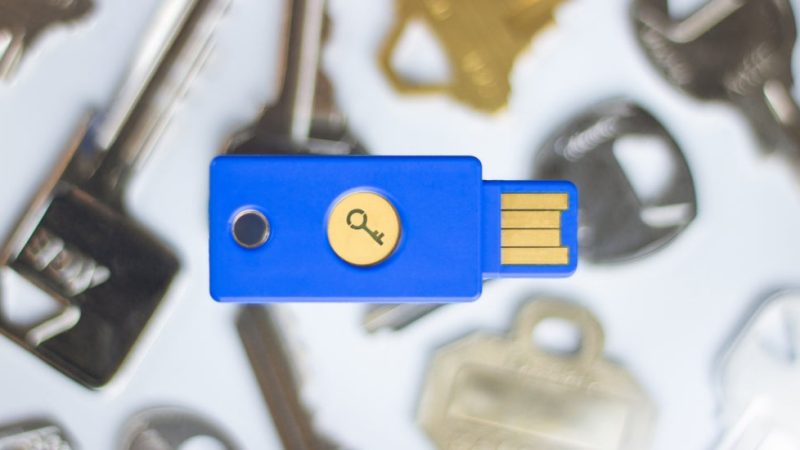
FIDO2 (Fast Identity Online 2) and Passkeys are at the forefront of the unphishable revolution. These standards were developed by the FIDO Alliance and World Wide Web Consortium (W3C) to promote passwordless authentication.
- Passkeys replace passwords with cryptographic key pairs.
- WebAuthn allows browsers to authenticate users securely.
- FIDO2 ensures that login credentials are unique to each website.
The result is an ecosystem where users authenticate with biometrics, hardware tokens, or trusted devices. Even if a hacker creates a fake website, they cannot extract the private key or reuse the login credentials elsewhere.
How Unphishable Systems Protect Users and Businesses
The benefits of adopting an unphishable system go beyond individual security. Businesses and organizations gain measurable advantages:
- Zero Credential Reuse: Each login credential is bound to a specific domain.
- Reduced Breach Risk: No password databases exist to hack or leak.
- Lower Operational Costs: Fewer password resets and IT support tickets.
- Compliance & Trust: Aligns with security standards like NIST and GDPR.
- Enhanced User Experience: Seamless logins through biometrics or device recognition.
For enterprises, adopting unphishable technology translates to a stronger brand reputation and minimized downtime due to phishing-related incidents.
The Role of AI and Behavioral Biometrics
While cryptographic systems provide the foundation for unphishability, Artificial Intelligence (AI) enhances it by detecting unusual behavior and authentication anomalies. Behavioral biometrics—like typing speed, mouse movement, and device orientation—add another invisible layer of protection.
AI-driven systems can detect when a login attempt deviates from a user’s normal behavior pattern, flagging it for additional verification. Together, cryptography and AI create a dynamic, adaptive defense system that evolves with new phishing tactics.
Unphishable in Practice: Real-World Applications
Several leading technology companies have already implemented unphishable systems:
- Google and Apple now use Passkeys for account logins.
- Microsoft enables passwordless sign-in via Windows Hello.
- Financial institutions are rolling out hardware-based FIDO2 keys for secure transactions.
- Government agencies are adopting zero-trust frameworks using cryptographic identities.
These implementations prove that unphishable security is not theoretical—it’s already transforming how we protect digital identities on a global scale.
Challenges and the Road Ahead
Despite its promise, widespread adoption of unphishable technology faces several challenges:
- Legacy Systems: Many platforms still rely on password-based authentication.
- User Education: People need to understand and trust passwordless systems.
- Hardware Dependence: Some methods require specific devices or security keys.
- Implementation Complexity: Integrating FIDO2 or WebAuthn into older systems can be resource-intensive.
However, these are temporary hurdles. As more companies adopt standards-based approaches, the ecosystem will become more unified, user-friendly, and accessible.
The Future of Phishing-Proof Security
The future of security lies in the complete eradication of passwords. By integrating biometric identity, cryptographic keys, and AI-powered monitoring, we can finally create a digital environment that is truly unphishable.
Soon, you won’t need to remember a single password, and phishing links will become obsolete. Each user’s identity will be tied to their trusted device, authenticated by something they are (biometric data) rather than something they know (passwords). This marks the beginning of a new era — where security and simplicity coexist.
Conclusion
Phishing has long been the Achilles’ heel of digital security. But with the rise of unphishable authentication methods like FIDO2, Passkeys, and AI-enhanced verification, the landscape is shifting dramatically. As businesses and individuals embrace passwordless systems, phishing will lose its power, paving the way for a safer, more trustworthy internet.
The transition may take time, but the direction is clear — Unphishable is the future of cybersecurity.
FAQs
1. What makes a system “unphishable”?
A system is unphishable when it uses cryptographic authentication that doesn’t rely on shared secrets like passwords or OTPs. This ensures that even fake sites can’t trick users into revealing their credentials.
2. Are Passkeys really safe?
Yes. Passkeys use unique, site-specific key pairs stored securely on a user’s device. Even if hackers clone a login page, they cannot replicate or use the private key needed to authenticate.
3. How is Unphishable different from 2FA?
Two-Factor Authentication (2FA) still relies on shared information (like codes sent via SMS). Unphishable systems remove that element completely, making phishing impossible even if a user interacts with a fake page.
4. Can small businesses implement unphishable authentication?
Absolutely. Many services, like Google Workspace, Microsoft Azure AD, and Okta, now offer FIDO2 and Passkey integration options that are scalable for businesses of all sizes.
5. Will passwords disappear completely?
Eventually, yes. As more platforms adopt unphishable authentication standards, passwords will become obsolete. Users will authenticate using biometrics, devices, or passkeys instead.
Also read: Bloody Stool After Alcohol Intake: Medical Causes and Care Options