
 By
By The Japanese writing system stands among the most captivating and intricate in the world. Unlike English, which uses a single alphabet, written Japanese combines three scripts—Hiragana, Katakana, and Kanji—each serving a unique function. Understanding these scripts is essential to grasping how modern Japanese communication works, from newspapers and novels to text messages and street signs. This guide takes a closer look at the origins, usage, and significance of these three systems and how they coexist within one language.
Historical Roots of Japanese Writing
The Japanese language did not originally have its own writing system. The foundation of written Japanese began around the fifth century when Chinese characters were introduced from the Asian mainland. These characters, known as Kanji, were first used by scholars and monks to write in classical Chinese. Over time, Japanese speakers adapted them to represent their own spoken words. As the need for simplicity grew, two phonetic scripts—Hiragana and Katakana—emerged, making written Japanese more flexible and accessible to ordinary people.
The Role of Kanji in Modern Japanese
Kanji forms the core of written Japanese. Each character represents a meaning, often corresponding to a whole word or concept. For example, the Kanji for “water” (mizu) and “mountain” (yama) are distinct symbols that carry deep cultural associations. There are thousands of Kanji in use today, though the Japanese Ministry of Education designates around two thousand as standard for daily reading and writing.
Kanji provides clarity and brevity in communication. Because a single character can express an idea that might take several syllables in English, Japanese writing can be dense yet efficient. However, learning Kanji poses a challenge even for native speakers, as each character can have multiple readings depending on the context.
Hiragana: The Foundation of Phonetic Writing
Hiragana is the most fundamental phonetic script in Japanese. Each symbol represents a distinct syllable rather than an individual letter. Originally developed from simplified Chinese cursive characters, Hiragana became the script used for native Japanese words and grammatical endings.
In modern usage, Hiragana connects words, marks verb tenses, and indicates particles that show grammatical relationships. For learners of Japanese, mastering Hiragana is often the first step. Its soft, rounded characters give the script an elegant flow, and it is indispensable for writing sentences smoothly and naturally.
Katakana: The Script of Modern Adaptation
Katakana shares the same sounds as Hiragana but serves a different purpose. Historically, it developed from fragments of Chinese characters used by monks for annotation. Today, Katakana is primarily used for foreign loanwords, onomatopoeia, and emphasis—much like italics in English.
For example, English words like “coffee” or “computer” are written in Katakana as “koohii” and “konpyuuta.” This script allows the Japanese language to absorb new terms while maintaining a clear visual distinction from native vocabulary. Katakana’s sharp, angular shapes lend it a modern, technical feel, making it common in advertising and branding.
The Harmony of Three Scripts
One of the most fascinating aspects of Japanese writing is how all three scripts work together. A single sentence may include Kanji for core words, Hiragana for grammar, and Katakana for foreign expressions. This combination creates a visually rich and rhythmically balanced text that captures both tradition and innovation.
For instance, a sentence about drinking coffee at home might include a Kanji for “home,” Hiragana for particles and verb endings, and Katakana for the word “coffee.” The result is a seamless blend of meaning and sound.
Learning to Read and Write Japanese
Mastering Japanese scripts requires patience, repetition, and exposure. Children in Japan spend years memorizing characters, starting with Hiragana and Katakana before progressing to Kanji. Non-native learners often follow the same path, using mnemonic techniques and reading practice to build fluency.
Digital tools and apps have made this process easier, allowing learners to trace characters, test themselves, and read graded materials. However, true proficiency comes from real-world reading—books, articles, and signage that demonstrate how the three scripts interact in context.
The Influence of Technology on Japanese Writing
Technology has changed how Japanese is written and read. With the rise of smartphones and computers, typing has become more common than handwriting. Input systems allow users to type phonetically in Hiragana, after which software suggests corresponding Kanji or Katakana words.
This has made communication faster but has also led to concerns about declining handwriting skills. Still, digital platforms have expanded access to Japanese globally, allowing learners and readers worldwide to engage with authentic texts more easily than ever before.
Cultural and Artistic Importance of the Scripts
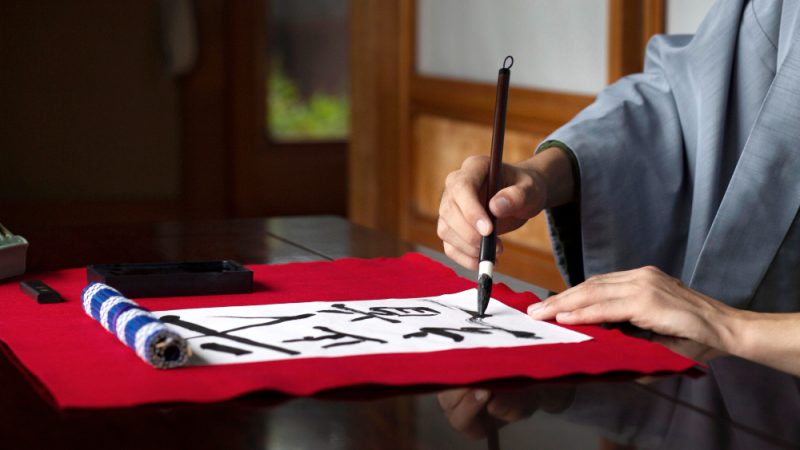
Beyond their functional roles, the three scripts hold artistic and cultural value. Traditional calligraphy, known as shodo, treats writing as a form of art where brushstrokes express emotion and character. Each script carries its own aesthetic: Kanji with its structured power, Hiragana with its flowing grace, and Katakana with its dynamic energy.
In literature and media, the choice of script can convey subtle nuances. A poem written entirely in Hiragana might feel soft and nostalgic, while Katakana can create a futuristic or foreign tone. These variations give Japanese writing a depth of expression unmatched by most languages.
The Future of Written Japanese
As Japan continues to evolve in a digital and global context, so too does its writing system. Some scholars predict that Kanji usage may gradually simplify, while others believe that the coexistence of three scripts will persist due to cultural pride and linguistic necessity.
Japanese writing reflects the country’s balance between preserving tradition and embracing modernity. Whether on paper or screen, the trio of Kanji, Hiragana, and Katakana continues to represent Japan’s identity—complex, harmonious, and uniquely expressive.
Conclusion
The main script of written Japanese is not one script but a beautiful fusion of three—Hiragana, Katakana, and Kanji. Together, they form a system that captures both the simplicity of sound and the depth of meaning. For readers, writers, and learners alike, understanding these scripts opens the door to Japan’s rich cultural and linguistic heritage. In a world where languages increasingly blend, Japanese remains a remarkable example of how diverse writing systems can coexist in perfect harmony.
FAQs
1. What are the three main scripts used in written Japanese?
The three main scripts are Hiragana, Katakana, and Kanji. Hiragana represents native sounds, Katakana is used for foreign or borrowed words, and Kanji represents meanings or ideas.
2. Why does Japanese use three writing systems?
Each script serves a different role. Kanji conveys meaning efficiently, while Hiragana and Katakana express sounds and grammatical details. Together, they make the language flexible and expressive.
3. Is Hiragana easier to learn than Kanji?
Yes. Hiragana has only forty-six basic characters and is phonetic, while Kanji includes thousands of complex symbols with multiple readings. Most learners start with Hiragana before moving to Kanji.
4. How do Japanese people type on computers and phones?
They type phonetically in Hiragana using a standard keyboard. The system then converts the input into Kanji or Katakana options for the user to select.
5. Are the scripts still used in modern Japan?
Absolutely. All three scripts remain essential in daily life—used in books, advertising, education, and digital media. Their continued coexistence keeps the Japanese writing system both functional and culturally rich.
Also read: How a Laser on a Gun Works – A Complete Guide to Aiming Technology